
You know that rush. The screen flashes, the numbers align, and suddenly you’re up—way up. Your brain floods with dopamine, and the next bet feels less like a choice and more like a reflex. Even the smartest players can lose track in that moment. It’s not about willpower; it’s about a system. This article isn’t another “just quit” lecture. It’s a practical framework built from years of watching real player behaviour and working elbow-to-elbow with gambling harm prevention experts. The goal? Keep the fun alive while keeping you firmly in control. Because responsible gambling isn’t about killing excitement—it’s about making sure you walk away feeling like you won, not like you lost yourself. Here’s how to gamble responsibly without losing the thrill.
Understanding Your Relationship with Gambling
Before you can stay responsible, you have to dig into the messy stuff—the why. Self-awareness isn’t a fluffy concept; it’s the only real foundation for control. Most people chase one of three motivations: social pressure (“everyone else is doing it”), the thrill of the unknown (“what if I hit big?”), or straight-up escape (“I need to stop feeling like this”). Pause for a second. Which one drives you? Ask yourself honestly: Do I gamble more when I’m stressed? Bored? Lonely?
Take a client I worked with. He didn’t realize until we talked that he gambled almost exclusively after dinner, alone, when the silence got loud. The real driver wasn’t the game—it was avoiding loneliness. Once he saw that, everything shifted. No shame, no judgment—just a roadmap. So here’s the deal: understanding your “why” removes the shame and lets you plan smart. Don’t skip this step. It’s not about quitting; it’s about knowing yourself first.
The Entertainment Mindset vs. the Escape Mindset
There are two distinct inner voices at the craps table. One says, “I’m paying for a few hours of fun—like a movie ticket and popcorn.” The other whispers, “I need to win back what I lost. I need to feel better.” Hear the difference? It’s the gap between a night out and an emotional painkiller. Identify which voice shows up most often for you. If you ever catch yourself playing to “forget something” or “numb a feeling,” that’s your red alert. Simple rule: when that happens, stop. Pause. Call a friend. Seriously—do it.

The Pre‑Game Plan: Rules You Set Before You Play
The most effective responsible gambling strategy happens before you place a single bet. Pre‑commitment removes the burden of willpower in the moment. It’s not about self‑control when the dice are rolling – it’s about having a system that makes control automatic. Here’s the step‑by‑step. The 1‑2‑3 rule works because it’s brutal in its simplicity. Step one: set a fixed bankroll – cash you can afford to lose, not money earmarked for rent or groceries. Step two: break that bankroll into session budgets. Step three: never exceed 10% of your total bankroll in any single session. That’s it. No exceptions. Time limits? Use a timer on your phone, not the casino’s clock – their clock is designed to make you lose track of hours. I once knew a player who swore by a two‑hour hard stop; every session, he’d set an alarm, and when it rang he’d walk away. He never blew through his bankroll in one night. Win goals matter too: if you’re up 50% of your session budget, cash out half immediately. That locks in profit and removes the urge to chase bigger wins. These rules are non‑negotiable. Write them on a sticky note if you have to. Slap it on your monitor or the inside of your wallet. No negotiation at 2 a.m. when you’re down. The plan is the plan.
Bankroll Allocation: Your Financial Guardrails
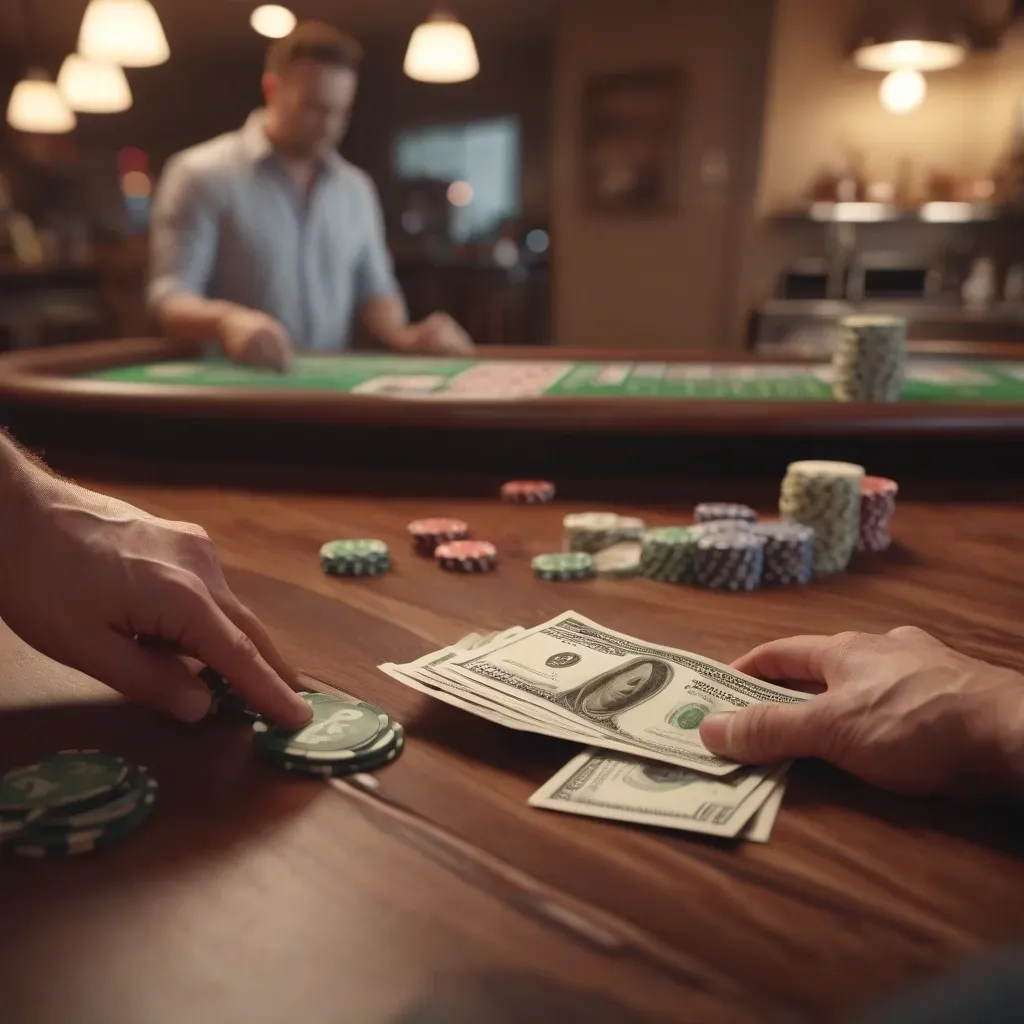
Think of the envelope system. Take physical cash, put it in an envelope labeled “fun money,” and once it’s gone, the session ends. No digital credit. No overdrafts. Studies show players who use cash lose 30% less than those swiping cards – the tactile separation of money creates a mental brake. In my work with budget planners, I’ve seen this principle cut impulsive bets by half. The envelope makes your gambling budget a discrete chunk of discretionary spending, not a leaky pipeline. When the envelope is empty, you stop. Period.
Time Limits: The Forgotten Boundary
A poker player I know used a kitchen timer – a physical, ticking device – and found he made noticeably better decisions in the first hour. After that, fatigue eroded his judgment. Beware the “just one more hand” trap; that’s the illusion of control whispering in your ear. Use a separate timer placed across the room, so you can’t snooze or ignore it. Once it rings, you stand up. No excuses. Time is a currency you can’t win back.
Emotional Discipline During Play
You can have the sharpest bankroll plan, the most detailed pre‑game strategy, and still watch it all shatter the moment your gut twists. That’s the problem with gambling tilt—it doesn’t announce itself. It sneaks in after a bad beat, a run of cold cards, or when you’re one win away from breaking even. Then comes the chase: you bet bigger, faster, stupider. Suddenly you’re not playing the game anymore; the game is playing you. The best counter? A pre‑committed in‑the‑moment rule like STOP. Step away from the table. Take five deep breaths—slow ones, belly fills. Observe what you’re feeling: frustration? panic? revenge? Only proceed if you can honestly say you’re calm. A five‑minute walk does more than clear your head; it resets the prefrontal cortex, the part of your brain that makes rational decisions. I once watched a guy in a downtown casino lose a serious stack, then just … stand up. He walked out. Later he told me he had a “cool‑off” rule written on his phone lock screen. That rule saved him from turning a bad night into a catastrophic one. Remember: emotions are data, not commands. They tell you something is off—they don’t have to tell you what to do next.
How to Spot Tilt Before It Controls You
You don’t wake up tilted. You drift into it. Watch for these signs: your breathing gets shallow, you start blaming the dealer or the machine, your bet sizes jump unpredictably, or you feel a tightness in your chest. One player I knew wore a simple bracelet as a mental tripwire—every time he saw it, he ran a three‑second pause before his next decision. That pause often saved him. Keep your own checklist: raised heart rate, repeated clicks of the mouse or chips, sudden silence when you were chatting before. If you spot one, you’re already past the line. Step back.
The Power of the ‘Loss Limit’ Vow
Picture your loss limit as a glass wall: invisible until you hit it, then absolutely unbreakable. Once you reach that number, you stop. No negotiation. No “just one more hand.” A reader once told me he ignored his loss limit, convinced he could recover. He lost three months’ worth of fun money in a single night—and then bought in again. That hurt. Contrast that with a disciplined player I know who hit his limit, cashed out, and went home feeling proud. He hadn’t won, but he had protected his bankroll and his self‑respect. Loss limits aren’t punishment. They’re freedom—the freedom to walk away with your head up.
Tools and Habits That Reinforce Responsibility
Modern gambling platforms pack a surprising number of built-in responsible gambling tools – but they’re like a fire extinguisher in a locked cabinet if you don’t set them up before the first spin. Deposit limits, wager caps, reality check pop‑ups, time‑out features, and self‑exclusion programs (including national databases like the UK’s GamStop) are all there, waiting. The trick? Install them when your head is cool, not when you’re chasing a loss.
Here’s how it works on a typical online casino account. Log in, head to “Responsible Gambling” or “Account Settings”; slide the deposit limit to your chosen amount – daily, weekly, monthly. Save. Done. For wager limits, you cap total bets per session; for reality checks, set a timer that pops up every 30 minutes. Time‑out lets you block access for a day or a week. Self‑exclusion is more serious – you register with a national database (GamStop in the UK) and you’re locked out of all participating sites. Physical casinos also offer pre‑commitment cards – you load a fixed amount onto a card before playing. No card, no game.
These tools remove the need for constant willpower. You make one decision, and the system enforces it. But even the best settings won’t stop you from rationalising a “just one more” session. That’s where a simple habit comes in: a short post‑session journal. Note what you won or lost, how you felt before and after, and whether you stuck to your plan. Review that journal weekly – it catches patterns early. I do this every Sunday, and it’s saved me from a dozen slow‑motion disasters.
Setting Deposit Limits: A One‑Time Decision That Protects You Every Time
Imagine a thermostat: you set the temperature once and forget it. That’s exactly how deposit limits work on gambling accounts. On most platforms, navigate to “Limits” or “Deposit Cap”, pick your max (say 50€ weekly), confirm with a password, and the system locks it for a chosen period – often 24 hours before you can change it. One user I know set a 50€ weekly limit three years ago and never exceeded it once. He stopped needing to talk himself out of late‑night deposits because the platform simply said “no”. No willpower required, just a one‑time decision.
The Journaling Habit: Your Personal GPS
A gambling journal is your personal GPS – it shows where you’ve been and helps you reroute. Keep it simple: date, game, initial bankroll, final outcome, mood before and after, and whether you stuck to your rules. Write it immediately after a session, not the next morning when memory gets fuzzy. One player noticed every Friday after a brutal work week, he’d gamble impulsively and lose. So he switched to Saturdays with a fresh mindset – and his losses dropped by 40% in a month. The journal didn’t judge; it just revealed the pattern. Use it, and you’ll catch habits before they catch you.
When It Stops Being Fun: Recognising Red Flags
Gambling shifts from entertainment to a problem long before most people notice. The red flags are subtle at first—small lies about time spent, little debts that pile up. Lying about how much money or time you actually put in is the first warning. Gambling to escape boredom, anxiety, or emotional pain? That’s a neon sign. Borrowing money from friends, family, or payday lenders to keep playing signals a dangerous spiral. Missing work, skipping commitments, or blowing off responsibilities because you were up all night or chasing losses? That’s when the house of cards starts to wobble. Irritability when you can’t gamble—snapping at loved ones, feeling restless or empty—is a classic withdrawal symptom.
None of this is an accusation. It’s just observation. Acknowledging even one red flag is not failure—it’s strength. The moment you recognise the pattern, you can act. Immediate steps: enforce a cooling-off period, 24 to 72 hours of zero gambling. If that feels impossible, pick up the phone. Helplines like GamCare or the National Council on Problem Gambling offer free, confidential support. Self-exclusion programs let you lock yourself out of venues and sites. Consider a client who took a three-month break; they came back with a healthier relationship to the activity. Many people can return to controlled gambling after a break—but only if they are brutally honest with themselves first.
The 24‑Hour Rule: A Simple Test
Impulses are emotional; decisions made after a pause are rational. When the urge to gamble hits, wait 24 hours. By then, the dopamine rush fades and boredom becomes obvious. A friend who tried this rule realised they only wanted to gamble when they had nothing else to do – not because they truly wanted to play. Repeat the rule until it becomes second nature. That delay rewires the brain’s reward system.
Where to Turn for Help
GamCare (UK), the National Council on Problem Gambling (US), and Gambling Therapy (global) offer free helplines and chat services. Many countries provide anonymous support without judgment. Save the number in your phone now – even if you think you don’t need it. You are not alone, and you are not weak. You are taking control.
Conclusion: You Are the Author of Your Gambling Story
So here’s the raw truth—responsible gambling isn’t some dusty rulebook; it’s a skill you sharpen, session by session. Those three pillars? Know yourself cold, pre‑plan like your future depends on it (because it does), and use every damn tool the casino or app hands you. Time limits, deposit caps, self‑exclusion—they’re not safety nets, they’re your armor. I’ve watched people flip their entire relationship with gambling using nothing but these ugly, practical steps. They stop chasing, start walking away, and actually enjoy the spin again. Your move now: pick one strategy from this article—maybe setting that pre‑session timer, maybe locking a budget—and commit before your next bet. Don’t overthink. Just do it. The best bet you can place is on yourself.