I. The Mechanical Heartbeat: Speed, Rhythm, and the Illusion of Predictability
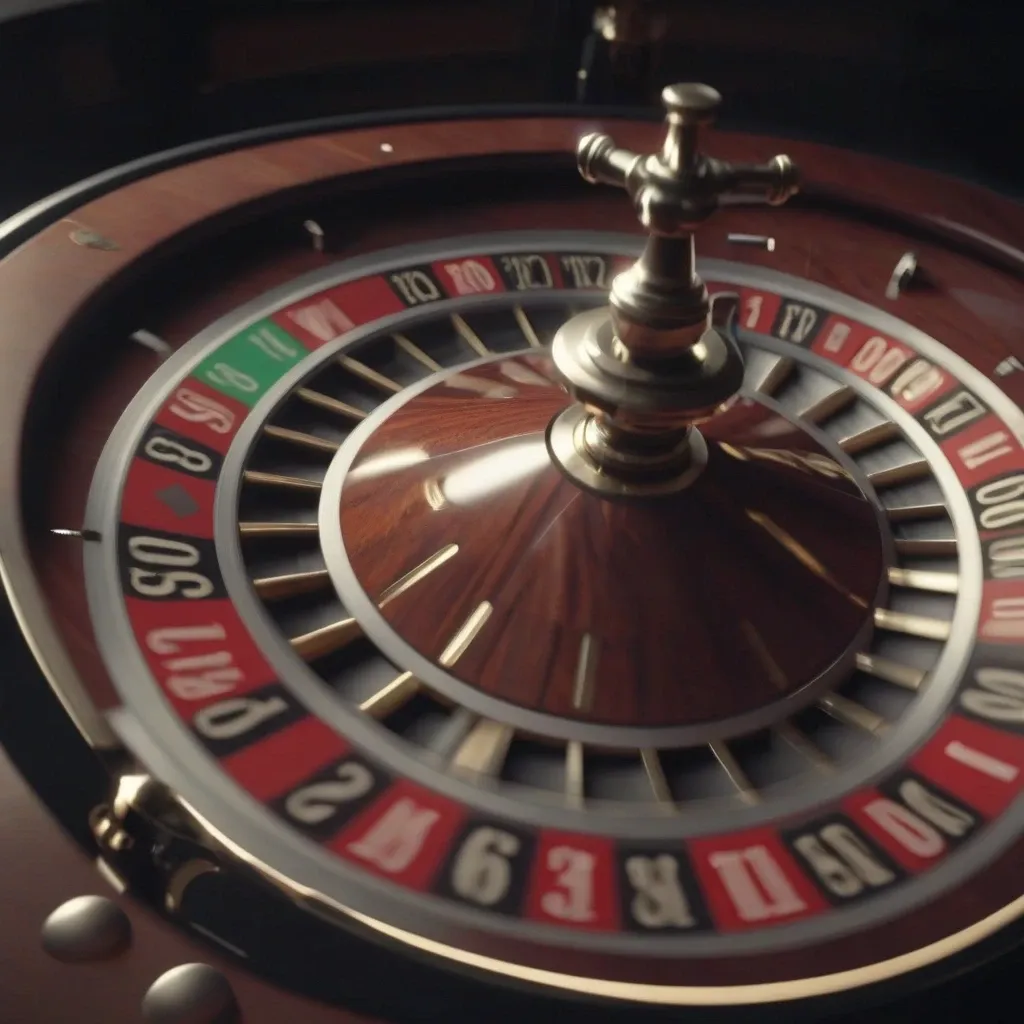
The roulette wheel is a machine, but it sings a hypnotic song. You hear it immediately: the sharp rattle of the ivory ball as it skips over metal frets, the low, deep hum of the polished wooden bowl spinning against its housing. The dealer’s rhythmic call—”Place your bets!”—works like a metronome. This speed and repetition create a weird, almost tactile rhythm. The ball drops with a specific clatter, slows down, and bounces over the diamond-shaped obstacles. That’s the roulette wheel physics in action. It feels physical, logical, mechanical. Because you can see the process—the spin, the bounce, the drop—your brain starts to scream that you can figure it out. This is the illusion of prediction at its most seductive.
Keywords: roulette wheel physics, gambler’s fallacy, game speed, ball drop, roulette patterns, illusion of prediction
Watch the ball closely during what gamblers call the ‘decay phase.’ It slows, wobbles, and then lands near a specific number. You’ll see it happen. A bet on 17 loses by one pocket. Your gut tightens. That’s the near-miss effect hard at work. Your brain processes that loss as a near-win, releasing a tiny squirt of dopamine. It tricks you into thinking you almost had it, so you try again. But here is the brutal truth: the metal ball hitting a fretted pocket has no memory. Each spin is a fresh, tiny explosion of random chance. The ball does not care about the last spin. It doesn’t know red just hit. Every single result is an independent event. The wheel’s speed does not create cycles; it creates noise. A practical self-awareness exercise? Next time you play, silently count how many spins you watch in a row without placing a bet. If you can’t watch ten spins without your trigger finger twitching, you’ve already lost the war against the machine.
Subtitle: The ‘Hot Number’ Fallacy: Why Your Brain Craves Patterns Where None Exist
This is the classic trap. The gambler’s fallacy is not a sign of low intelligence; it is a leftover from our caveman days. Thousands of years ago, if you saw rustling grass, it was safer to assume a lion was there (a pattern) than to assume it was just wind. Your brain survived by seeing connections everywhere. But at a roulette table, this evolutionary superpower becomes a poison. Consider this: Black has hit five times in a row. Your neurochemistry is screaming, “Red is due! It has to be red!” You feel it in your stomach. But the probability of red hitting on the next spin remains exactly 48.6% (on a single-zero wheel). Keywords: gambler’s fallacy, clustering illusion, cognitive bias, hot numbers, randomness, probability misperception It never changes. Ever.
I have literally watched players spend two hours chasing a single color based on this exact error. They saw a ‘hot streak’ of block red hits and convinced themselves a pattern existed. They lost their entire bankroll because they misread noise for signal. This is the clustering illusion—we see patterns in random data where there is none. To fight this, do something brutally simple before your first spin. Write down a rule based purely on probability, not gut feelings. For example: “I will bet on black only after five reds, but I will cap my loss at ten units.” Do not skip this step. The paper forces your logical brain to speak before the emotional brain hijacks the session.
II. The Social Stage: The Dealer, The Table, and The Performance of Authenticity
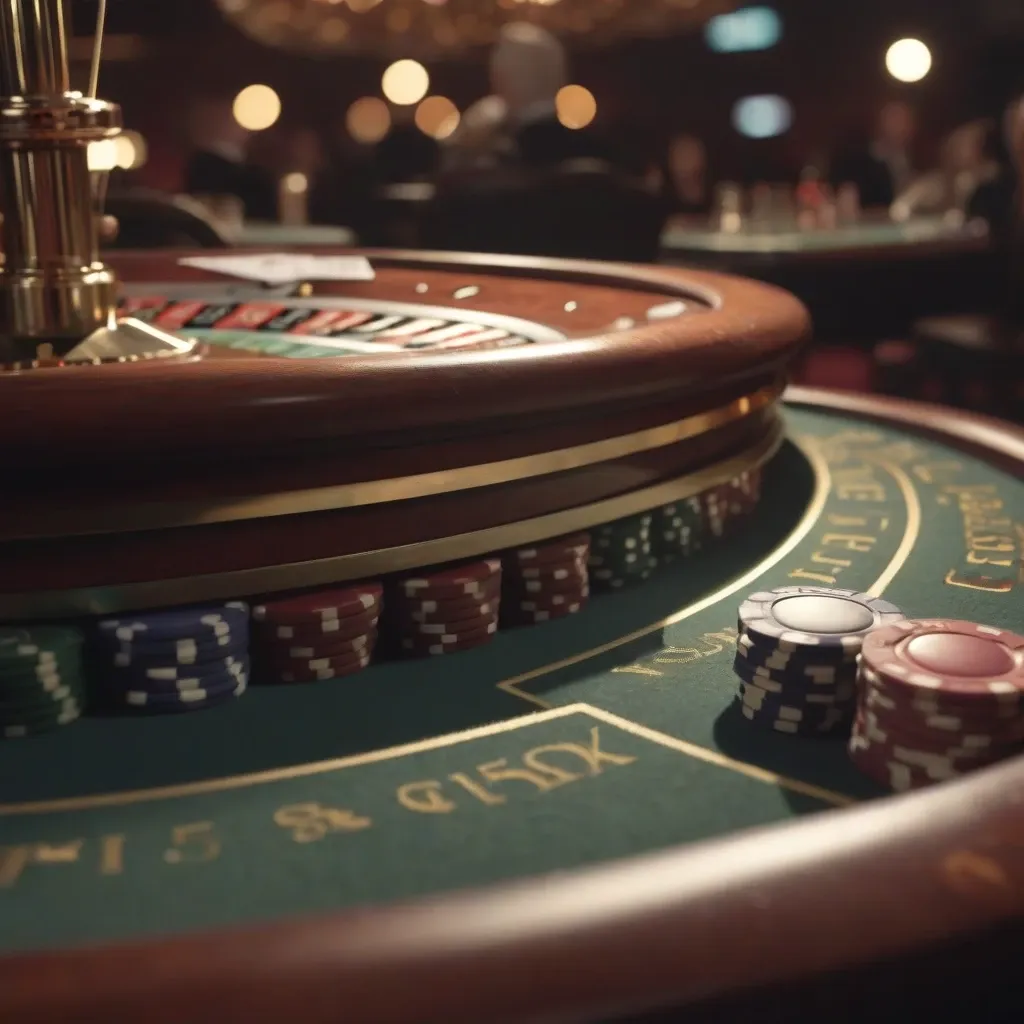
Step into a live dealer lobby and you leave the sterile, silent world of RNG slots behind. Now there’s a real person dealing cards, spinning a wheel, smiling at the camera. That human presence doesn’t just add atmosphere—it rewires your brain’s relationship with the game. You aren’t betting against a cold algorithm; you’re interacting with a professional who calls you by name, reacts to your streak, and creates an environment that feels almost like a real casino floor. This manufactured connection is the secret sauce behind the emotional grip live games have on players. It deepens your investment far beyond the money you’ve wagered. You start to feel a social bond with the dealer and the table, and that bond makes walking away harder. The dealer’s professionalism, conversational skills, and subtle encouragements aren’t random—they’re designed retention mechanisms. Every nod, every “good luck,” every comment about the last spin nudges you to stay. The chat window compounds this effect. Players form micro-communities, competing for the dealer’s attention, sharing reactions, and even feeling peer pressure to keep betting. This social layer is a professional production, polished to make you feel seen and valued. In reality, you’re feeding an environment built to maximize your time and loss. The sunk cost fallacy gets a social upgrade here: you aren’t just attached to your money—you’re attached to the relationship you believe you’ve built with the dealer and the table. That emotional tie is the most dangerous hook of all.
The Illusion of a ‘Fair’ Game: Why Seeing a Human Hand on the Ball Matters
Contrast the sterile pop of an RNG slot with the physical action of a live roulette wheel. Your brain sees a croupier’s hand release the ball, watches it bounce across the numbered pockets. That sensory evidence tricks you into believing the outcome is more “real” and therefore more trustworthy. It’s a powerful illusion: you interpret physical randomness as controllable, less risky than a computer-generated number. In interviews with frequent players, a striking pattern emerges: they consistently report feeling they “deserved” to win more in live roulette because they could “see” the process. The transparency of the human hand masks the same statistical house edge. Your trust in the dealer becomes misplaced trust in the game’s fairness. Here’s the reality check: that dealer is a performer, not a partner. Every spin is still rigged in favor of the house. Reframe your view—watch the human action as entertainment, not evidence of fairness.
The ‘Near Miss’ and the Dealer’s Encouragement: How Micro-interactions Fuel the Loop
The cycle is insidious. You place a bet. The ball spins. It lands one number off yours. The dealer looks into the camera and says, “So close! Unlucky.” That single micro-interaction triggers a near-miss effect—your brain treats the loss as a near-win, releasing almost as much dopamine as an actual win. This is not coincidence; it’s a core mechanic in live dealer games. Intermittent reinforcement keeps you glued, and the dealer’s talk paces that reinforcement. The speed of the game, the dealer’s tone, even the pause before revealing the outcome—all engineered to string you along. When you hear “unlucky” or “next time,” treat it as a red flag. It’s a signal from the production, not a personal invitation. Take a breath. Assess your current loss. Don’t chase a perceived righteous win. The dealer’s encouragement is part of the loop, not a path out of it.
III. The Infinite Game: Betting Structures, Time Displacement, and the ‘Just One More’ Trap
The Trap of ‘Parlay’ and ‘Martingale’: Why ‘Safe’ Betting Systems Are a Fast Track to Loss
The internet is a mess of noise about “safe” betting systems. People swear by the Martingale, the Fibonacci, or the Parlay like they’ve found a backdoor code. The math, however, is brutally simple and doesn’t care about clever sequences. The Martingale is the most dangerous drug. It looks logical: double your bet after a loss until you win, then recoup everything. The flaw? Table limits and your bankroll will never cooperate. Do the arithmetic. A six-loss streak on a red/black bet that started with a £10 wager? You will need a £640 bet on the seventh spin. Most tables have a ceiling. Most players have a broke account. The Parlay, or “press your bet” after a win, just amplifies the variance. You win three in a row, and suddenly you’re betting £80 of “house money” on a single number. The house edge hasn’t changed. You have just designed your own trap. One actionable negative rule to engrave in your head: Never use a single betting system for an entire session. The moment you start a progression, you have already ceded your ability to quit rationally. You are no longer a player; you are a machine executing a doomed algorithm.
Think about the player I once watched, £100 bankroll, chasing a £5 Martingale progression. It starts innocently. He wins a few, feels clever. Then a loss. Double to £10. Loss. Double to £20. Loss. He’s sweating. The next loss would demand a £40 bet, but his brain clicks over: “Just one more double.” The fifth loss in a row hits, and the next required bet is £160. He has only £35 left. His own rule, his own “system,” is now broken. He switches to a flat bet, panics, and loses the last of it. This is not bad luck. It is a predictable statistical outcome. The table limits and your bankroll size have a silent war, and the Martingale is the declaration of it. You don’t beat the house edge with a sequence of numbers. You only accelerate your risk of ruin.
The Disappearing Hour: How the Absence of Natural Pauses Creates a Trance State
Then there is the matter of time. The spinning roulette wheel has no rounds. No innings, no level-ups. It is a continuous river of action that is designed to swallow your awareness. Your focus goes tunnelled. The phone in your hand gets heavy, but you don’t notice it. You might forget to blink properly. This is not laziness. This is a genuine flow state, a psychological trance that is highly addictive. There are no natural pauses to remind you that you are human, that you have a life outside the screen. You tell yourself you’ll leave after the next spin. Then you win a small one and think, “Free spins.” Then you lose two in a row and think, “Just one more to get back to even.”
The counter-strategy to an interface engineered for this trance is not willpower alone. It is a specific, physical break. I recommend the “Two-Spin Rule.” It works like this: after every two consecutive losses, you must physically stand up. Do not just shift in your chair. Stand up, walk away from the computer or table for exactly two minutes. Go stare at a wall. Look at a clock. Reset your mental architecture. This simple act breaks the hypnotic loop. It is not a weakness to need a break. It is a predictable response to a design that wants you to forget the passage of time. Set an alarm on your phone, not for your money, but for your brain. 25 minutes. Then you stop, even if you are winning. The “just one more” trap is a memory trap, and standing up is the only way to reset the tape.

IV. The Invisible Architecture: How the Interface and Environment Keep the Reels Spinning
Look at the screen. That spin button isn’t just a button—it’s a hypnotist. The interface of every live roulette platform is engineered to blur the line between intent and reflex. Bright, celebratory animations blast for wins; losses get a muted shrug. Sound design? Louder for a near-miss than for a full loss. The “Recall Bet” button is pure poison: one click, and you repeat a losing wager without a second thought. It’s frictionless failure. The tip? Turn off every sound effect. Mute the game entirely. Place every bet manually, typing the amounts or tapping each chip. Never let the interface make decisions for you. Each manual action is a sliver of rationality—a moment to ask, “Do I really want this?” If you let the environment do the work, you’re not playing anymore. You’re being played.
The ‘Autoplay’ Paradox: Why Ease of Play is the Enemy of Control
Autoplay transforms a strategic mental exercise into a repetitive consumer habit akin to eating from a buffet without tasting the food. You set the number of spins, hit go, and then watch your balance vanish with zero engagement. This is the slot machine effect in digital drag: continuous play without friction leads to massive, silent losses. It’s the ultimate surrender—you hand over the wheel while pretending you’re still driving. A hard rule: if you ever use autoplay, you have already lost your ability to manage your bankroll. Never use it. Not once. Because that one click is the beginning of the end of your control.